Limited-Time Slot Events Reshape Jackpot Building Patterns
Taylor Hoffmann · May 23, 2026

Limited-Time Slot Events Reshape Jackpot Building Patterns
Seasonal reel events introduce time-bound incentives that alter how jackpots accumulate across online slot platforms, and operators adjust contribution rates during these windows to match heightened player activity. Research from multiple regions shows that limited-time multipliers and seeded progressives draw larger daily contributions while the offers remain active. Data indicates these periods compress typical accumulation timelines because more players feed into the pools simultaneously.
Mechanics Behind Time-Limited Incentives
Operators structure seasonal reel events around fixed calendars that align with holidays or promotional windows, and they attach multipliers to jackpot contributions only while the campaign runs. A standard progressive might receive 1 percent of each bet year-round, yet during a May 2026 event that percentage rises to 3 percent for participating titles. This adjustment accelerates meter growth without changing base game mathematics, so the pool swells faster but resets or pays out within the same defined timeframe.
Seeded jackpots receive initial boosts from the operator at the start of each seasonal window, which resets accumulation patterns for new cycles. Observers note that these seeds encourage quicker player entry because the visible meter already sits above its usual starting point, and contribution percentages then determine how rapidly the total climbs from that elevated base.
Player Activity and Contribution Shifts
Figures from industry tracking services reveal that daily active users on featured slots increase between 40 and 70 percent during limited-time events, and this surge directly feeds jackpot pools. Players concentrate bets on the promoted titles because the enhanced contribution rates make the jackpot appear closer to payout thresholds. The concentrated volume shortens intervals between significant wins while the event lasts, after which accumulation reverts to baseline rates once the incentive expires.
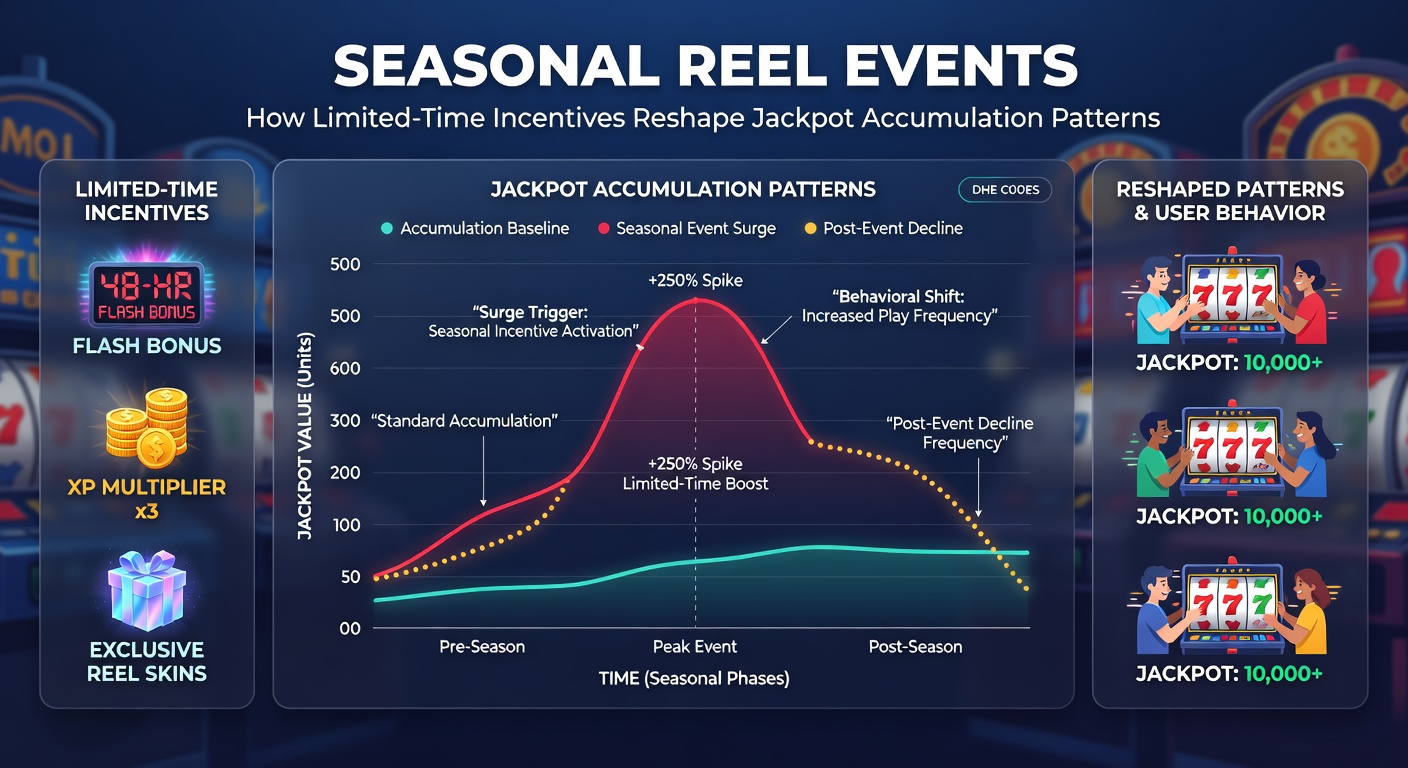
Analysts at the Australian Gambling Research Centre have documented similar compression effects in monitored markets, where seasonal campaigns produce steeper upward curves on progressive meters compared with non-event periods. The same reports highlight that post-event lulls follow these spikes, as total player spend redistributes across the broader game library once multipliers disappear.
Regional Regulatory Observations
The Nevada Gaming Control Board collects contribution data from licensed operators and publishes aggregate trends that illustrate how time-bound promotions affect pool sizes across different game categories. Reports covering spring 2026 campaigns show measurable upticks in average progressive balances during the active weeks, followed by stabilization once standard rates resume. These records demonstrate that operators maintain transparency on contribution percentages even when temporary adjustments occur.
Canadian provincial regulators track parallel patterns through monthly operator filings, and summaries released in early 2026 confirmed that seasonal incentives produce predictable spikes in jackpot funding without altering long-term payout ratios. The filings also record the number of new progressives introduced exclusively for event windows, which further diversifies accumulation pathways available to players.
Longer-Term Pattern Adjustments
Over multiple seasonal cycles, operators refine contribution schedules based on historical performance data, and they calibrate seed amounts to balance player engagement against reserve requirements. This iterative approach produces more stable post-event resets because accumulated knowledge informs the size of each new seed. Studies released by academic gaming research groups indicate that such refinements reduce volatility in jackpot sizes between consecutive events.
Cross-platform comparisons show that titles carrying seasonal multipliers consistently outpace non-promoted games in contribution volume during the active window, yet the disparity narrows once the incentive concludes. The resulting pattern creates distinct accumulation phases: accelerated growth under limited-time rules followed by moderated growth under standard rules.
Conclusion
Seasonal reel events therefore function as temporary accelerators within existing jackpot frameworks, and data from regulatory bodies across North America and Australia confirm measurable shifts in accumulation speed and player concentration. These changes remain confined to defined promotional periods, after which standard contribution mechanics resume and meters continue their longer-term trajectories.