Inside the Reward Pipeline: Mapping How Promotional Layers Guide Players from Entry Offers to Tiered Retention Systems in Digital Reel Platforms
Gisela Albrecht · Aug 1, 2026
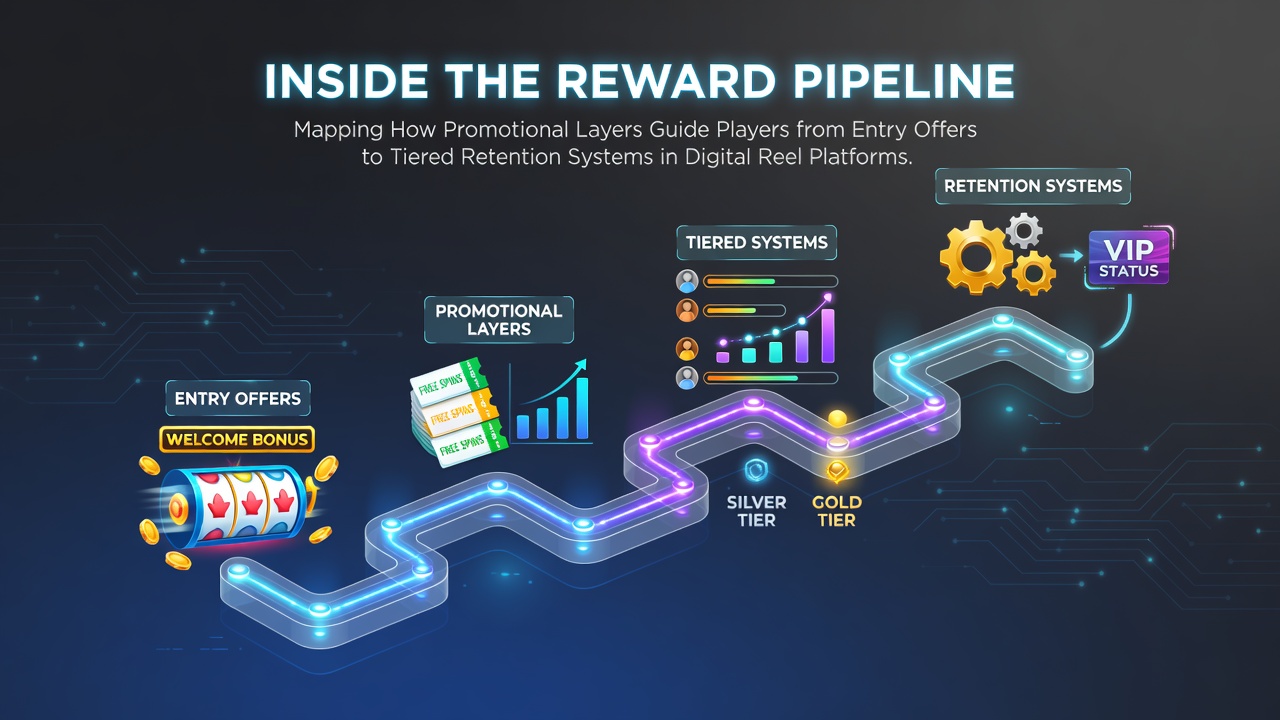
Inside the Reward Pipeline: Mapping How Promotional Layers Guide Players from Entry Offers to Tiered Retention Systems in Digital Reel Platforms
Digital reel platforms structure promotional systems as sequential pipelines that move participants from initial entry incentives toward sustained engagement through tiered retention mechanisms, and operators design these layers to align with observed player behavior patterns documented across multiple markets.
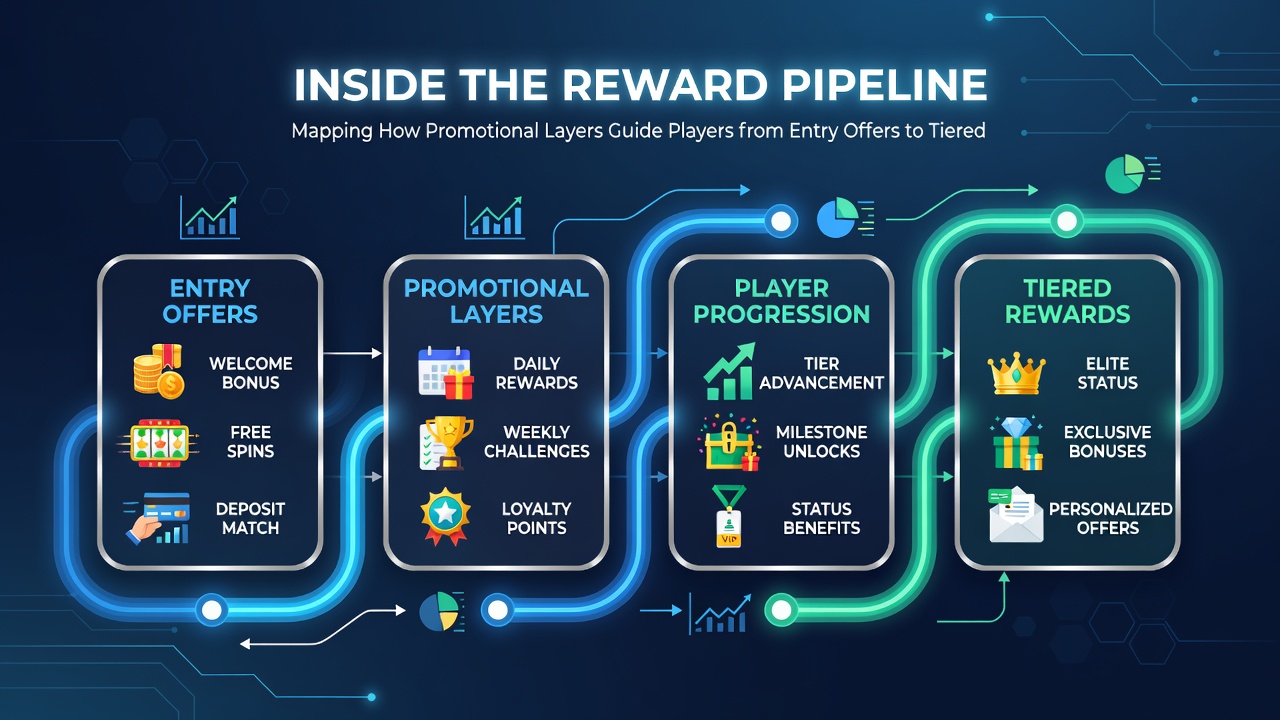
Entry offers typically begin with welcome packages that combine deposit matches and free spin allocations, according to industry analyses from the American Gaming Association, while platforms track activation rates to refine subsequent communications that direct users toward the next layer of rewards.
Initial Entry Mechanisms and First-Stage Conversion
Platforms present new accounts with time-limited deposit bonuses and no-deposit spin credits that require specific wagering thresholds before funds become withdrawable, and data from regulatory filings in Nevada indicate that completion rates for these thresholds influence how quickly players receive invitations to loyalty programs.
Operators segment users based on deposit frequency and session duration during the first seven days, after which automated systems trigger personalized free spin bundles or cashback percentages that maintain momentum toward the second promotional tier.
Progression Layers and Behavioral Triggers
Once players clear initial wagering requirements, platforms introduce mid-tier offers such as reload bonuses and targeted free spin campaigns tied to specific game titles, and these incentives often carry adjusted playthrough multipliers that reflect individual risk profiles compiled from prior activity logs.
Research published by the University of Nevada, Las Vegas gaming studies department shows that players who receive these mid-stage prompts demonstrate higher return rates compared with those who remain at the entry level, and platforms adjust trigger timing using algorithms that monitor daily active minutes and average bet sizes.
August 2026 updates to digital gaming interfaces in several North American jurisdictions introduced standardized disclosure requirements for bonus expiration dates, which altered how operators sequence the transition from one promotional layer to the next while preserving the pipeline structure.
Tiered Retention Architectures
Loyalty systems organize participants into bronze, silver, gold, and platinum categories determined by cumulative points earned through real-money play, and each tier unlocks escalating benefits including higher cashback percentages, exclusive tournament access, and dedicated account managers.
Canadian provincial regulators have documented that tier advancement correlates with increased average revenue per user, prompting platforms to embed visible progress bars and milestone rewards that encourage continued participation without abrupt jumps between levels.
Points accumulation formulas typically award one point per dollar wagered on digital reels, with multipliers applied during promotional periods, and operators publish these formulas in terms and conditions to maintain compliance across jurisdictions.
Data Integration and Personalization Pathways
Platforms aggregate session data, deposit histories, and game preference metrics to calibrate the timing and value of each subsequent offer, and this integration allows the pipeline to adapt when players approach inactivity thresholds identified through historical cohort analysis.
European industry reports from the European Gaming and Betting Association note that predictive models reduce churn by routing at-risk accounts toward retention bonuses before standard cycles complete, thereby extending the effective lifespan of entry-level incentives into long-term tier benefits.
Conclusion
The reward pipeline in digital reel environments operates as an interconnected sequence where entry offers feed directly into tiered structures, and regulatory developments scheduled for later in 2026 continue to shape disclosure standards without disrupting the underlying progression mechanics that platforms have refined over multiple years of operational data.